
The richest Asian Mukesh Ambani is flying to Doha to meet US President Donald Trump, his second meeting since Trump returned to presidency in January this year.

"Oil companies are still losing money. . .Please pray that prices come down further so that we can consider reducing fuel prices," Petroleum Minister Murli Deora told reporters.

The government in FY26 Budget should announce an "effective" personal income tax cut to support consumption and demand, Barclays said on Thursday. In its FY25-26 Union Budget preview, Barclays said the key ask from the Budget, to be presented on February 1, is to support growth while adhering to fiscal consolidation path.

Retail inflation eased to 7.04 per cent in May, mainly on account of softening food and fuel prices as the government as well as the RBI stepped in to control spiralling price rise by way of duty cuts and repo rate hike. However, the inflation print stayed above the Reserve Bank's upper tolerance level of 6 per cent for the fifth month in a row. The Consumer Price Index (CPI) based retail inflation was 7.79 per cent in April.

IOC and other state retailers had on September 16 raised jet fuel price by 2.5 per cent.

Retail inflation declined to a five-month low of 4.85 per cent in March mainly due to cooling food prices, inching towards the Reserve Bank's target of 4 per cent, according to official data released on Friday. The Consumer Price Index (CPI) based retail inflation was 5.09 per cent in February and 5.66 per cent in March 2023. Previously, CPI-based inflation was the lowest at 4.87 per cent in October 2023.
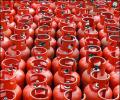
The price of non-subsidised cooking gas (LPG) was on cut by Rs 21 per cylinder and that of jet fuel (ATF) by a steep 3 per cent on the back of falling international oil rates.

From the Sensex firms, Tata Steel, Eternal, Tech Mahindra, Maruti, Mahindra & Mahindra, Infosys, IndusInd Bank, HCL Tech, Tata Consultancy Services and Bharti Airtel were the major gainers. Telecom operator Bharti Airtel climbed nearly 1 per cent after it posted about a five-fold jump in consolidated net profit to Rs 11,022 crore in the March 2025 quarter, mainly due to the tariff hike impact and one-time gain on tax benefits. However, Asian Paints, Tata Motors, Kotak Mahindra Bank, NTPC and Power Grid were among the laggards.
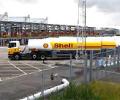
Business opportunity after phased diesel deregulation the main trigger.

Retail inflation declined to a five-year low of 3.54 per cent in July mainly on account of subdued prices of food items, and base effect, according to official data released on Monday. The Consumer Price Index (CPI) based retail inflation was 5.08 per cent in June 2024 and 7.44 per cent in July 2023.

It constitutes over 40 per cent of an airline's operating costs.

India's top fuel retailers IOC, BPCL and HPCL together lost around $2.25 billion (Rs 19,000 crore) in revenue for keeping petrol and diesel prices on hold during elections in five states, including Uttar Pradesh, Moody's Investors Services said on Thursday. State fuel retailers did not revise petrol and diesel rates for a record 137 days despite prices of crude oil (raw material for producing fuel) rising to $120 per barrel compared to around $82 in early November when the hiatus began. "Based on current market prices, the oil marketing companies are currently incurring a revenue loss of around $25 (over Rs 1,900) per barrel and $24 per barrel on sale of petrol and diesel, respectively," Moody's said in a report.
Reliance Industries Ltd-owned fuel retail outlets have threatened to launch an indefinite strike from Thursday protesting against the huge losses due to decrease in demand of its fuels.

Jet fuel or ATF price on Wednesday was cut by almost 6 per cent after four rounds of monthly increases since July, while commercial cooking gas (LPG) rates were raised by a steep Rs 101.5 per 19-kg cylinder in line with international benchmarks. However, the price of domestic LPG - used in household kitchens for cooking purposes - remained unchanged at Rs 903 per 14.2-kg cylinder. Aviation turbine fuel (ATF) price was cut by Rs 6,854.25, or 5.79 per cent, in the national capital to Rs 111,344.92 per kl from Rs 118,199.17, according to a price notification of state-owned fuel retailers.

Jet fuel prices on Thursday were hiked by the steepest ever 16 per cent to catapult rates to an all-time high in step with hardening international oil rates.

The Indian services growth broadly steadied in May and was underpinned by healthy demand conditions, new client wins and greater staffing capacity, a monthly report said on Wednesday. The seasonally adjusted HSBC India Services PMI Business Activity Index was at 58.8 in May, marginally up from April's 58.7 and signalled another sharp rate of expansion.

ATF in Delhi will cost Rs 56,324.79 per kilolitre, an increase of Rs 77.93 per litre or 0.13 per cent, from Rs 56,246.86 per kl, an official of the Indian Oil Corporation, the nation's largest fuel retailer said.

Essar Oil has cut petrol and diesel prices by an average of Rs 1.50 a litre to bring them at par with that of public sector firms.
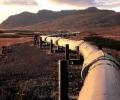
State-run gas utility GAIL India on Monday said it should be exempted from payment of fuel subsidies as it does not get any upside from rise in crude oil or natural gas price.

Oil-to-telecom conglomerate Reliance Industries Ltd will invest Rs 75,000 crore in North Eastern states in setting up 350 biogas plants, expanding its telecom services, retail footprint, and clean energy projects, chairman Mukesh Ambani said on Friday. Speaking at the Rising NorthEast Investors Summit here, Reliance Industries Ltd chairman and managing director said his group will invest in factories for high-quality FMCG products in the region and setting up a 150-bed cancer hospital in Manipur.

'The path beyond diesel is not going to be clear. It is really going to be dependent on applications.'
As fuel prices surged in September, the government's decision to ask companies to cut price by Rs1 each on a litre of petrol and diesel came as a dampner for private players.

The private companies want a level playing field so that they can compete with the government companies in fuel retailing.
RIL plans to make good its losses by promoting guest houses, restaurants.
Jet fuel prices were on Thursday hiked by 3.8 per cent, the second increase in rates in as many months.
State-run fuel retailers are losing about Rs 135 crore (Rs 1.35 billion) per day on sale of petrol, diesel, LPG and kerosene and the government is looking at proposals to make up for these losses, a senior official said.

Hike comes on back of a massive 6.14 per cent increase in rates effective from March 16 in line with rising crude oil prices.

Retail investors have become a force to reckon with in the last 10 years with their ownership of Indian equities rising 800 basis points, or 8 per cent, to 23.4 per cent during this period, suggests a recent note from Morgan Stanley. This number, Morgan Stanley said, is set to rise in the next few years as Indian households are still underinvested in equities. India's demographics, policy framework, investor education and modest positive real rates, it said, will fuel the 'equity cult' in India.

Wholesale price inflation eased to 2.05 per cent in March, as against 2.38 per cent in February, government data showed on Tuesday. The wholesale price index (WPI) based inflation, however, rose year-on-year.
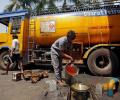
Investors shunned shares of oil marketing companies (OMCs) on Friday as they feared that the government's decision to cut retail prices of petrol and diesel could hurt the companies' profit margins in the near term. On Thursday, the government announced that OMCs will reduce pump prices of petrol and diesel after a record 22 months, making them cheaper by Rs 2 per litre in the national capital. The changes were effective from Friday.
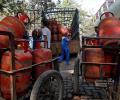
Petroleum and oil marketing companies raised the price of commercial liquid petroleum gas (LPG) cylinders by Rs 350.50 per unit and domestic LPG cylinders by Rs 50 per unit with immediate effect from Wednesday.
.jpg)
Investment can only be by prospective dealers.

N Chandrasekaran, chairman of Tata Consumer Products, has said in the company's annual report for FY25 that India remains one of the bright spots of economic growth amid a volatile global environment. He said India's long-term growth was underpinned by strong demographic and economic fundamentals as well as structural reforms.

State-owned oil firms on Tuesday hiked jet fuel by 5.5 per cent in sync with rise in global rates.
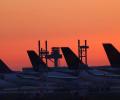
Jet fuel prices on Monday were hiked by a steep 6.5 per cent on the back of a rally in international oil prices. Aviation turbine fuel or ATF price was hiked by Rs 3,663 per kilolitre, or 6.5 per cent, to Rs 59,400.91 per kl in the national capital, according to a price notification of state-owned fuel retailers. This is the third increase in jet fuel prices since February. Rates were increased by 3.6 per cent on February 16, and by Rs 3,246.75 per kl on February 1. The increase in rates will add to the margin woes of airlines who continue to operate flights at less than capacity, amid pandemic-driven travel restrictions.

While sedan sales have declined in the mass-market segment in recent years, demand remains strong for BMW sedans, which account for 45 per cent of its sales in India.

The Indian economy continues to sustain the momentum achieved in the first half of 2023-24 and expectations of a fresh round of capex by the corporate sector is likely to fuel the next leg of growth, the Reserve Bank Bulletin said on Tuesday. "The likelihood of the global economy exhibiting stronger than expected growth in 2024 has brightened in recent months, with risks broadly balanced," said an article on 'State of the Economy' published in the bulletin.
As crude oil prices rose sharply, private companies like Essar Oil and Reliance Industries closed their retail outlets as they found it difficult to compete with state-owned oil companies, which were selling fuel below the production cost with support from the government. While Essar Oil has drawn up plans to re-open its retail outlets, Reliance Industries has decided not to go ahead with the retail plan

The state-owned oil firms on Wednesday hiked jet fuel prices by a huge 3.6 per cent to Rs 46,876.58 per kl, making it the fifth straight increase in rates since October when international crude oil prices started rising.
A company executive said unlike India, the price of petrol changed on a daily basis in the US. "In India, we don't have a level playing field, since the government gives public sector oil marketing companies subsidies. Since the RIL refineries operate on better refining margins, we could earn more revenue from free markets," he said. "We have better understanding beyond a theoretical knowledge about the US and European markets after our long experience in these markets."
